The Anatomy of a Feast
In the last decade, food in India has increasingly become a site of suspicion, surveillance, and political violence. Dishes that have existed for centuries within the subcontinent’s shared culinary history are now selectively marked as ‘Muslim’, recast as foreign, impure, or threatening under the rhetoric of communal politics. The Anatomy of a Feast reflects on this slow cultural erasure by tracing how memory, identity, and belonging continue to survive through food.
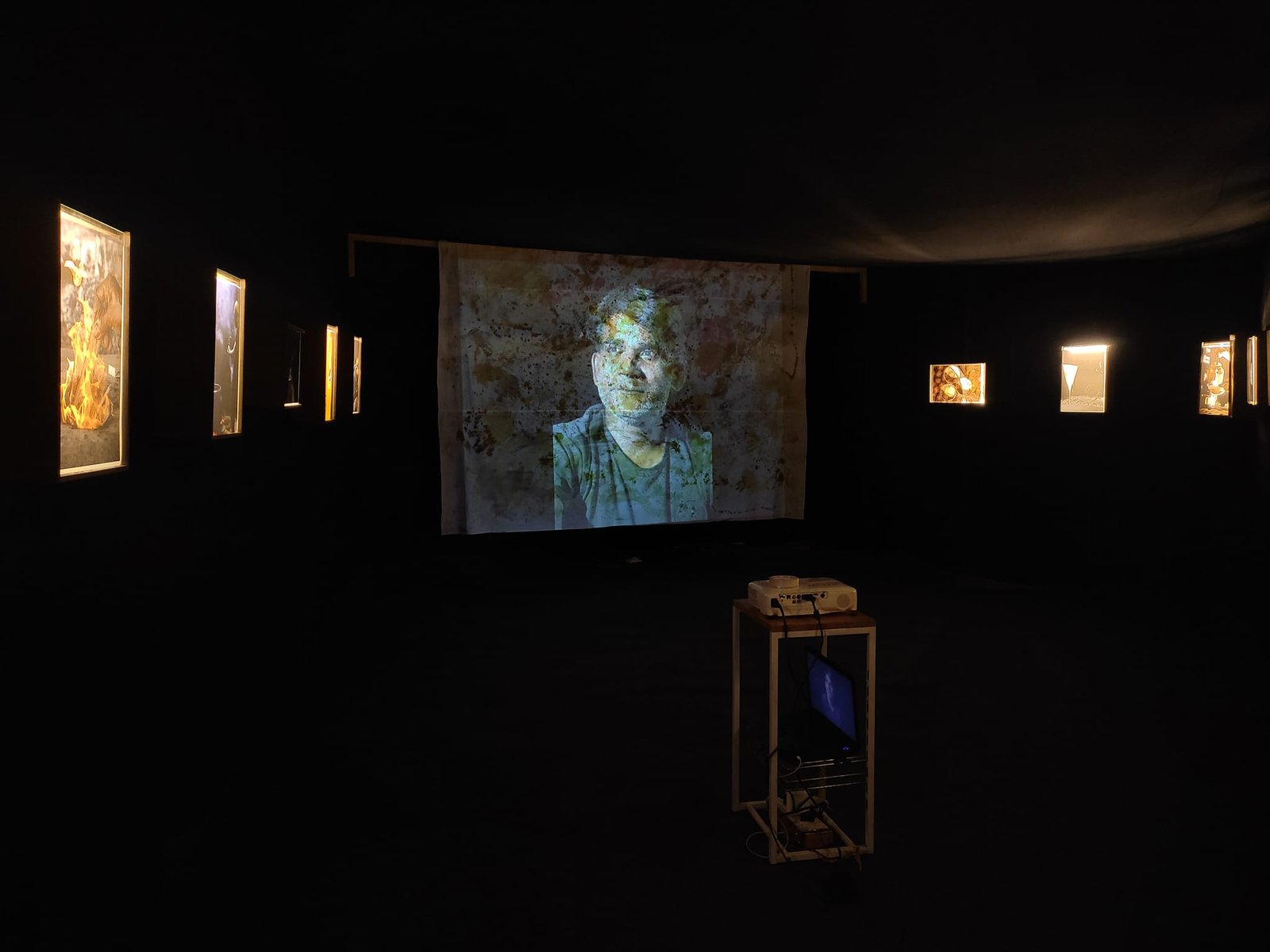
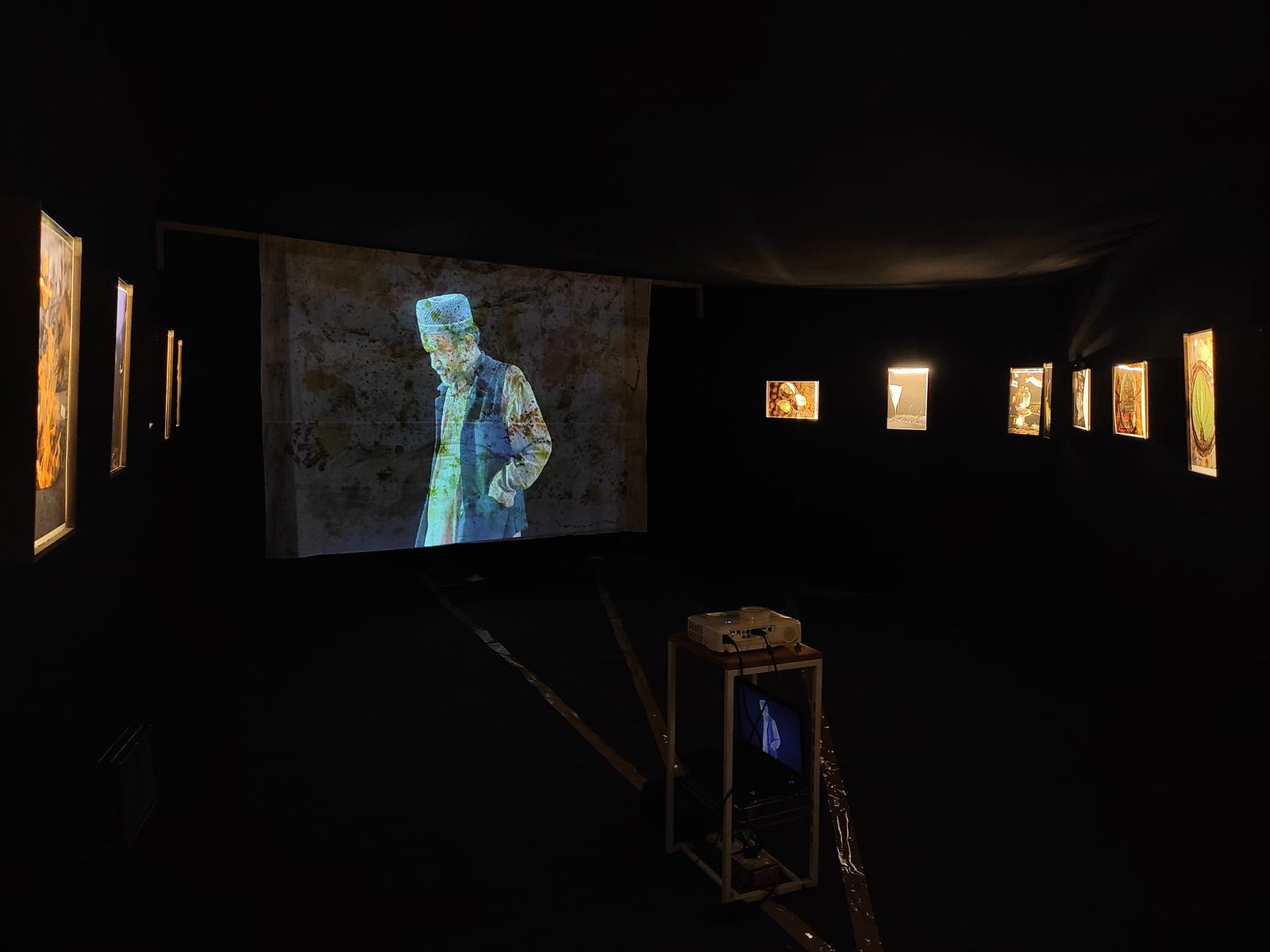
The installation gathers edible remnants from Muslim-owned food stalls and home kitchens in Lucknow, Uttar Pradesh. Gravies, minced meat, oils, spices, rice, and residue is absorbed directly onto the textile surface, transforming the cloth into an archive of living histories. These marks function simultaneously as evidence and elegy, shedding light on the intimate traces of minority communities whose presence is increasingly pushed toward invisibility. Projected portraits of Muslim shop owners, home chefs, and khaansamas from the city appear across the food-stained textile like fragile apparitions, embodying lives suspended between visibility and disappearance. Surrounding lightboxes, containing digital negatives, extend this constellation of memory through fragmented images of culinary rituals and domestic inheritance.
Together, the work constructs an immersive environment where food becomes more than sustenance. It becomes testimony, resistance, and a carrier of intergenerational memory. Through textile, projection, photography, and collected food residue, the installation asks: what does it mean for a culture to endure when everyday acts of eating are politicised?